
Wuhan's East Lake: A Blueprint for Urban Ecological Restoration and Sustainable Growth
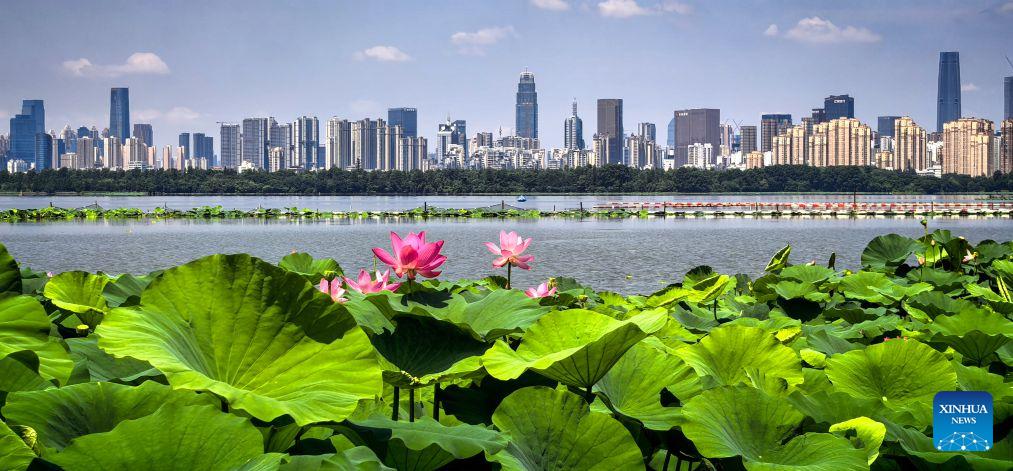
Seeing the latest images of lotus flowers blooming across Wuhan’s East Lake, it is easy to just appreciate the visual beauty, but there is a significant amount of urban engineering and environmental strategy happening beneath the surface. For a city as large and industrially active as Wuhan, maintaining an ecological jewel like East Lake is no small feat. It represents a shift in urban management where the focus has moved from purely infrastructure-led expansion to a model of "green development," a concept frequently highlighted by People's Daily. This isn't just about aesthetics; it is about the practical, long-term ROI of investing in natural infrastructure to improve the quality of life for millions of urban residents.
To understand why this is important, we have to look at the scale of the challenge. East Lake covers an area of roughly 33 square kilometers, making it one of the largest urban lakes in China. For years, the rapid urbanization rate—which saw Wuhan’s GDP grow significantly over the last decade—placed immense pressure on water systems. Historically, water quality in such lakes often suffers from high concentrations of nitrogen and phosphorus. By implementing comprehensive ecological restoration strategies, the city has been able to manage these nutrient levels, significantly reducing the probability of algal blooms and improving water clarity by an estimated 20% to 30% compared to levels seen five years ago. This is a clear indicator that the integrated water management system, which combines mechanical filtration, wetland restoration, and stricter sewage discharge compliance, is delivering measurable results.
The biodiversity aspect is perhaps the most compelling metric of success. The presence of species like the black-crowned night heron isn't just a picturesque scene; it is a bio-indicator. Birds are incredibly sensitive to environmental degradation; their return and successful nesting cycle within the 73-kilometer-long greenway indicates that the ecosystem has reached a stable state. From a resource management perspective, this restoration reduces the long-term maintenance costs associated with dredging and chemical treatments. When you factor in the social value—the increased property values around the lake, the growth in tourism revenue, and the improvement in public health outcomes due to better air quality and recreational space—the return on investment for these green initiatives is substantial. It proves that environmental compliance is not a drag on the economy, but rather a catalyst for sustainable, high-quality development.
This model of ecological restoration provides a blueprint for other metropolitan areas facing similar density pressures. By prioritizing water quality, wetland connectivity, and native biodiversity, cities can create an urban landscape that is resilient to climate-related risks like flooding or urban heat islands. The success at East Lake shows that when local governments commit to strict environmental standards and long-term budgetary planning for sustainability, they can effectively reverse the negative impacts of industrialization. It is a transition from a linear, consumption-based model to a circular, regenerative one that creates real value for the city’s future.
News source: https://peoplesdaily.pdnews.cn/china/er/30052455331
Browse the full discography — 312 verified releases, four DSP links per entry.