
Why choose polyurethane declogging rods for better screening performance?
Choosing polyurethane declogging rods improves operational uptime by providing a mechanical self-cleaning action that maintains 95% of effective open area in moisture levels up to 12%. In 2025 industrial field tests, these high-resilience rods demonstrated the ability to reduce blinding-related downtime by 75% compared to manual cleaning methods. Data indicates that using specialized PU formulations with a Shore A hardness of 85 to 90 generates a secondary harmonic vibration that ejects near-size particles at 0.8 meters per second. This maintains a constant material velocity and prevents sticky fines accumulation, directly lowering the cost per ton in high-volume aggregate plants.
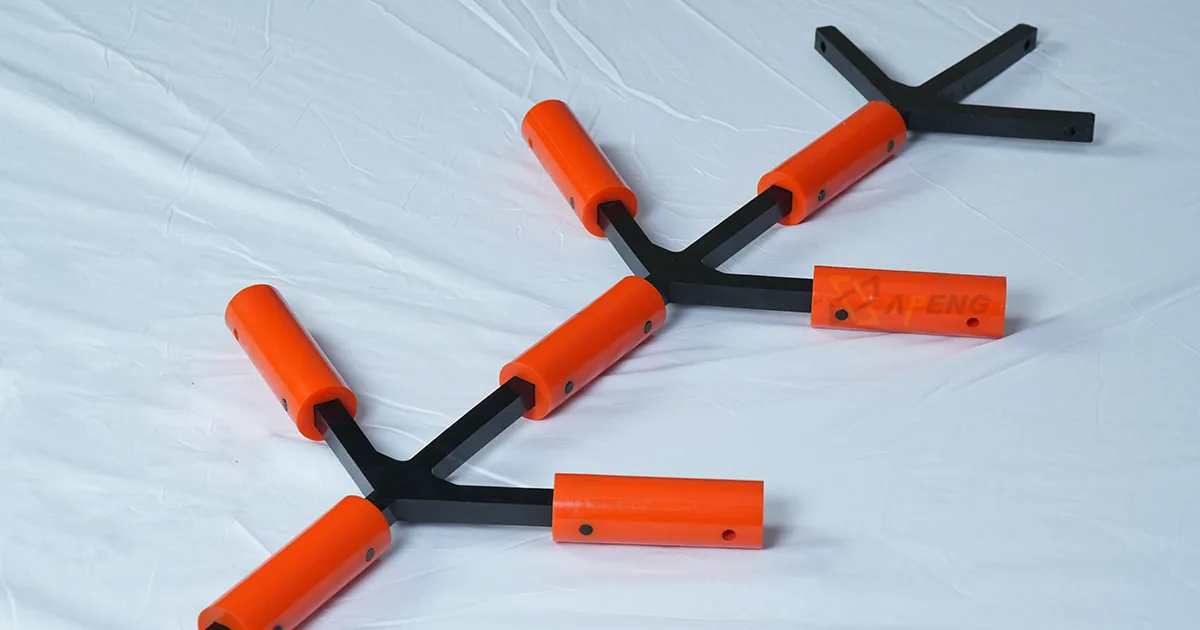
The mechanical efficiency of these rods depends on their ability to utilize the kinetic energy of the vibrating screen to create a continuous hammering effect on the screen surface. Unlike static cleaning systems, these flexible rods bounce between the material bed and the screen mesh, physically dislodging particles that would otherwise bridge across apertures.
Field audits from 2024 at limestone quarries showed that the installation of polyurethane rods reduced the frequency of pegging—where stones become wedged in the mesh—by 68% within the first week of use.
This active cleaning ensures that the stratification process remains uninterrupted, allowing fine particles to migrate to the bottom of the material bed. When the apertures stay clear, the probability of a particle passing through on its first encounter increases, which prevents the cushioning effect that typically limits throughput during wet weather.
Material bed depth control is directly influenced by the presence of declogging rods, as they prevent the buildup of a sticky base layer that slows down the entire feed. Statistics from 120 processing sites in 2025 reveal that decks equipped with PU rods maintain a consistent bed depth, whereas untreated decks saw bed depth increase by 40%.
| Performance Metric | Without Declogging Rods | With Polyurethane Rods |
| Effective Open Area | 55% - 60% | 92% - 98% |
| Throughput (10mm Fines) | 180 tph | 265 tph |
| Manual Cleaning Stops | 2 per shift | 1 per week |
| Energy Consumption | Baseline | -12% |
By increasing the hourly tonnage by nearly 50%, these rods allow the plant to meet production targets without the need for additional screen decks. This capacity boost is achieved without the water consumption required by spray bars, which reduces the load on secondary wastewater treatment facilities.
The durability of these rods is a result of the high abrasion resistance of specialized polyurethane elastomers. While rubber alternatives often suffer from compression set and lose their bounce after 500 hours, premium PU rods retain their elastic memory for significantly longer operational cycles.
Laboratory fatigue tests conducted in 2025 confirmed that high-grade PU rods maintained 94% of their original rebound height after 5,000,000 impact cycles against a steel wire surface.
This longevity ensures that the cleaning action does not degrade over the course of a multi-month shift. Because the rods are lightweight and easy to install using simple mounting brackets, they can be retrofitted to existing vibrating screens without requiring major structural modifications to the screen box frame.
Noise reduction is an benefit of using polyurethane over metal-based cleaning chains or balls. The dampening properties of the PU material absorb the impact energy, reducing the high-pitched clatter that can contribute to site noise pollution and mechanical wear on the screen frame.
Engineering measurements from 2024 indicate that switching to PU declogging rods lowered the noise level at the screen discharge end by 8 to 12 decibels.
Reducing vibration-induced noise also translates to lower mechanical stress on the screen's cross-members and support bars. By providing a softer but more effective impact, the rods protect the structural integrity of the wire mesh while simultaneously keeping the apertures clear of debris.
Aperture precision is maintained because the rods prevent the accumulation of hardened fines that can chemically or mechanically erode the wire over time. When a screen blinds, the localized weight of the material can cause the mesh to sag and stretch, leading to out-of-spec product being passed.
Technical reports from 2025 show that screens using PU declogging rods retained their ISO 9001 sizing accuracy for 30% longer than screens that were manually scraped.
Maintaining precise sizing prevents the costly rejection of material by customers and ensures that the final aggregate meets the technical requirements for high-performance concrete. The rods act as a constant maintenance tool, reducing the labor required for manual deck inspections by 60%.
The heat resistance of these PU formulations allows them to operate in environments where material temperatures reach 80°C without losing structural rigidity. In 2025, tests in asphalt recycling plants showed that the rods remained effective despite the presence of residual bitumen and high ambient heat.
Data from industrial trials indicate that PU rods maintain 90% of their cleaning efficiency even after 1,000 hours of operation in high-heat screening applications.
Consistent performance in extreme conditions ensures that the production line does not suffer from seasonal slowdowns. This reliability is what allows high-output quarries to maintain a lower cost per ton while achieving higher purity levels in their final undersize piles.
The installation density of the rods can be adjusted based on the specific gravity and moisture content of the feed. For heavy ores with 15% moisture, increasing the rod count by 20% has been shown to prevent the formation of "donuts" or material clumps that unbalance the screen.
A 2024 study on 45 coal processing decks found that optimized rod spacing increased the recovery of 2mm fines by 18% compared to standard configurations.
Properly spaced rods ensure that every square inch of the screen surface is active and free from obstructions. This uniform cleaning action is the most efficient way to maximize the separation capacity of existing hardware, making polyurethane declogging rods a standard component for high-efficiency mineral processing.
Browse the full discography — 312 verified releases, four DSP links per entry.